
Introduction
Whether it’s a high-speed locomotive, an advanced defence platform, or an aerospace assembly, modern engineering systems depend on one common factor: precision.
Behind every reliable machine is a network of carefully manufactured parts designed to perform consistently under demanding conditions. As industries continue to evolve toward higher efficiency, safety, and performance standards, the demand for precision components has increased significantly.
But what exactly makes these components so important, and why are industries investing heavily in precision manufacturing capabilities?
What Are Precision Components?
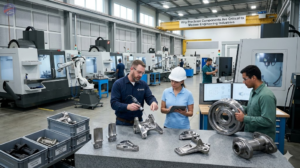
Precision components are engineered parts manufactured to strict dimensional tolerances and quality specifications. These components are designed to fit seamlessly within larger assemblies and perform reliably throughout their operational lifecycle.
Unlike conventional machined parts, precision-engineered products require:
- Controlled dimensional accuracy
- Material traceability
- Surface finish consistency
- Repeatable production processes
- Comprehensive inspection and validation
These requirements make precision manufacturing essential for industries where performance and reliability cannot be compromised.
Why Precision Matters More Than Ever
Today’s industrial systems are becoming increasingly sophisticated. Components are expected to perform under higher loads, tighter tolerances, and more demanding operating environments.
A small dimensional deviation can lead to:
- Increased wear and tear
- Reduced system efficiency
- Assembly issues
- Unexpected downtime
- Higher maintenance costs
This is particularly important in sectors such as defence, aerospace, railways, and automotive manufacturing, where component failure can have significant operational consequences.
As a result, manufacturers are focusing on advanced production techniques and quality-driven processes to ensure every part meets exact specifications.
How CNC Machining Drives Modern Manufacturing
One of the biggest advancements supporting precision production is CNC machining.
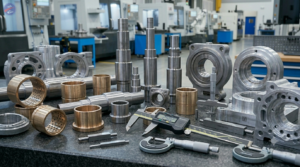
Computer Numerical Control (CNC) technology allows manufacturers to create highly accurate components with exceptional repeatability. Unlike manual machining processes, CNC systems follow programmed instructions that minimize variation and improve consistency.
Modern CNC machining enables:
- Complex geometries
- Tight tolerances
- Faster production cycles
- Improved surface finishes
- Reduced human error
This technology has become a cornerstone of modern manufacturing facilities serving critical industries.
Companies like Vaani Precision Industries utilize advanced machining capabilities to support customers requiring high-quality engineered parts across multiple sectors.
The Role of Precision Components in Defence Manufacturing
India’s defence sector is undergoing rapid modernization. As indigenous production increases under initiatives such as Atmanirbhar Bharat and Make in India, the need for reliable domestic suppliers has never been greater.
Modern defence systems depend on thousands of individual components, including:
- Bushes
- Housings
- Structural supports
- Mechanical linkages
- Assembly components
Each of these parts must meet stringent quality requirements.
Precision manufacturing ensures that defence components maintain dimensional stability, structural integrity, and repeatable performance under demanding operating conditions.
A strong domestic manufacturing ecosystem not only improves supply chain security but also supports long-term self-reliance in strategic sectors.
Aerospace: Where Precision Meets Performance
Few industries demand higher manufacturing standards than aerospace.
Aircraft and aerospace assemblies operate in environments where even minor deviations can impact performance. Components must withstand vibration, temperature variation, and long operational cycles while maintaining consistent functionality.
Manufacturing aerospace components often requires:
- High-grade materials
- Tight dimensional control
- Superior surface finishes
- Process documentation
- Inspection traceability
As India’s aerospace sector continues to expand, precision engineering companies are playing an increasingly important role in supporting local production and supply chain development.
Railway Modernization Depends on Manufacturing Accuracy
India’s railway infrastructure is among the largest in the world, transporting millions of passengers and tonnes of freight every day.
The reliability of this network depends heavily on the quality of mechanical components used in braking systems, locomotive assemblies, and structural applications.
Precision-engineered railway components contribute to:
- Improved operational safety
- Reduced maintenance requirements
- Longer component life
- Consistent performance
As railway modernization projects continue across the country, demand for reliable manufacturing partners remains strong.
What Makes a Reliable Precision Manufacturing Partner?
Selecting the right manufacturing partner involves more than machine capacity.
Customers increasingly look for suppliers that offer:
Engineering Expertise
Understanding technical drawings, tolerances, and application requirements.
Quality Assurance
Structured inspection processes and measurement systems.
Material Traceability
Verification of raw materials and production records.
Production Flexibility
Ability to handle both prototypes and production volumes.
On-Time Delivery
Reliable production planning and execution.
Companies that combine these strengths are better positioned to support critical industries and long-term customer relationships.
The Future of Precision Engineering in India
India’s manufacturing sector is entering a period of significant opportunity.
Growth in defence, aerospace, railway infrastructure, and advanced industrial production is creating demand for higher-quality components and stronger domestic supply chains.
The future will likely be shaped by:
- Greater automation
- Advanced CNC technologies
- Digital manufacturing systems
- Increased quality requirements
- Stronger industry collaboration
Manufacturers that continue investing in technology, workforce development, and process discipline will be well-positioned to support this growth.
Conclusion
Precision components may not always be visible, but they are essential to the performance, safety, and reliability of modern engineering systems.
From defence manufacturing and aerospace development to railway modernization and industrial machinery, precision engineering forms the foundation of progress.
As India strengthens its manufacturing capabilities and pursues greater self-reliance, companies like Vaani Precision Industries contribute to this transformation by delivering quality-driven machining and fabrication solutions that support some of the country’s most important industries.
The future of engineering will be defined by accuracy, consistency, and innovation—and precision manufacturing will remain at the center of that journey.
Pingback: How Quality Control Improves Reliability in Precision Component Manufacturing -